Kinkaku-ji is a Zen Buddhist temple of the Rinzai sect's Shokoku-ji school, officially named Rokuon-ji. Originating as the mountain villa "Kitayamaden" built by Ashikaga Yoshimitsu, the 3rd shogun of the Muromachi shogunate, it was registered as a component of the UNESCO World Heritage Site "Historic Monuments of Ancient Kyoto" in 1994 as a structure symbolizing Kitayama Culture, which fused court noble culture and samurai warrior culture. Across its vast grounds spreads a strolling garden designated as a National Special Historic Site and Special Place of Scenic Beauty, centered around the Shariden (relic hall) covered in gold leaf.
At the top of Kinkaku's roof sits a golden phoenix, and in the waterfall basin at the back, there is a stone set at an angle. This stone is said to represent the Chinese legend of a carp climbing a waterfall to become a dragon. Centering on the stories of the phoenix and the Carp Stone mentioned in the video, this article traces the history of the grounds to the extent that could be verified.

Three-Story Kinkaku and the Phoenix on the Roof
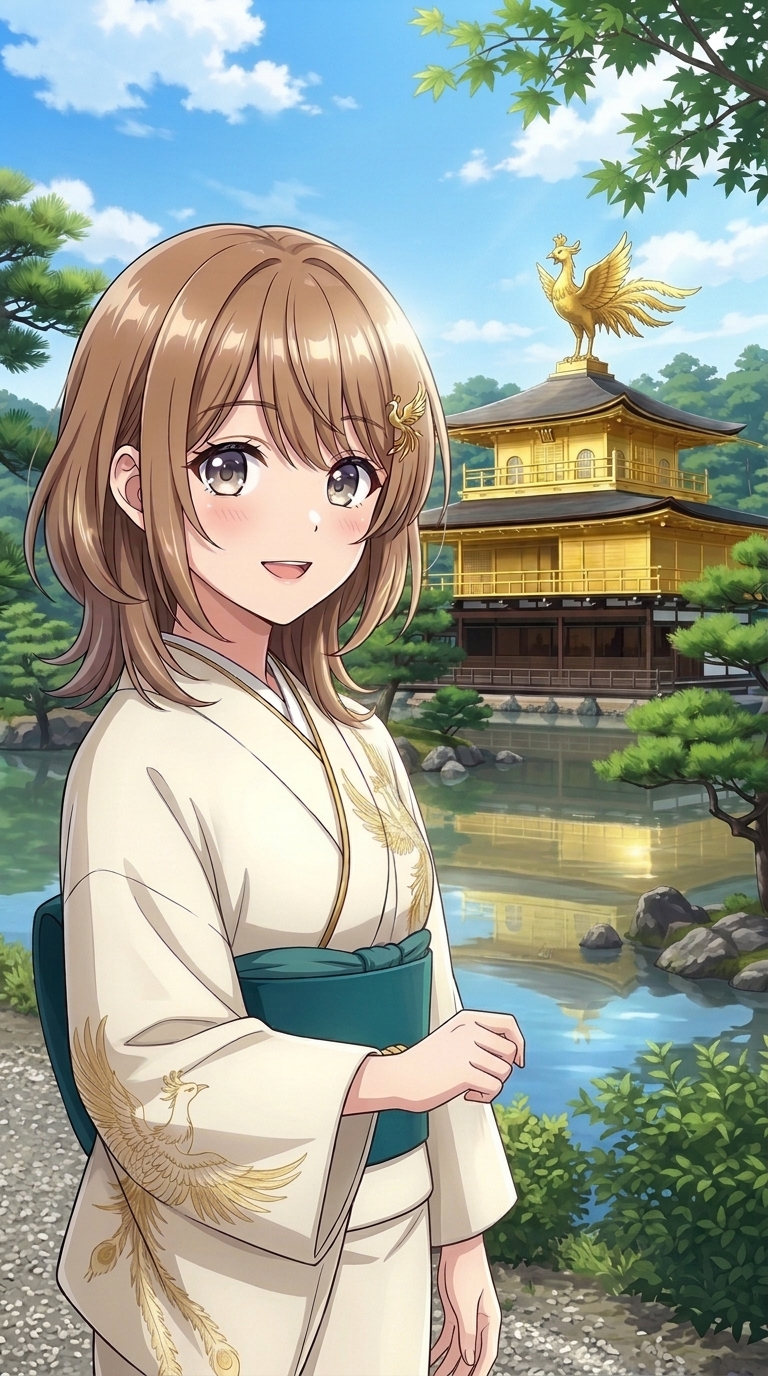
The Shariden "Kinkaku," the symbol of Rokuon-ji, is a three-story pavilion architecture covered with pure gold leaf over lacquer. A different architectural style is adopted on each floor: the first floor is "Hossu-in," built in the shinden-zukuri style inheriting the residential form of Heian-period nobles; the second floor is "Choon-do," in the buke-zukuri style incorporating the warrior housing style of the Kamakura period; and the third floor is "Kukkyo-cho," built in the Zen Buddhist temple style incorporating Chinese Tang style. Combining three different styles into a single building, it conveys the architectural techniques of the Muromachi period.
The roof is finished in kokera-buki (shingle roofing) made by layering numerous thin sawara cypress boards, and at the summit sits a golden phoenix, regarded as an auspicious bird in Chinese mythology. The current phoenix was created in 1987. In the "Kyoko-chi" (Mirror Pond) spreading before the Shariden, islands such as Ashihara-jima and famous stones said to have been competitively presented by Muromachi-period daimyos are arranged. On windless days, the Shariden is reflected symmetrically on the clear water surface, creating the scene known as the "Inverted Kinkaku."
Ryumon Waterfall: Expressing the Story of a Carp Becoming a Dragon in Stone
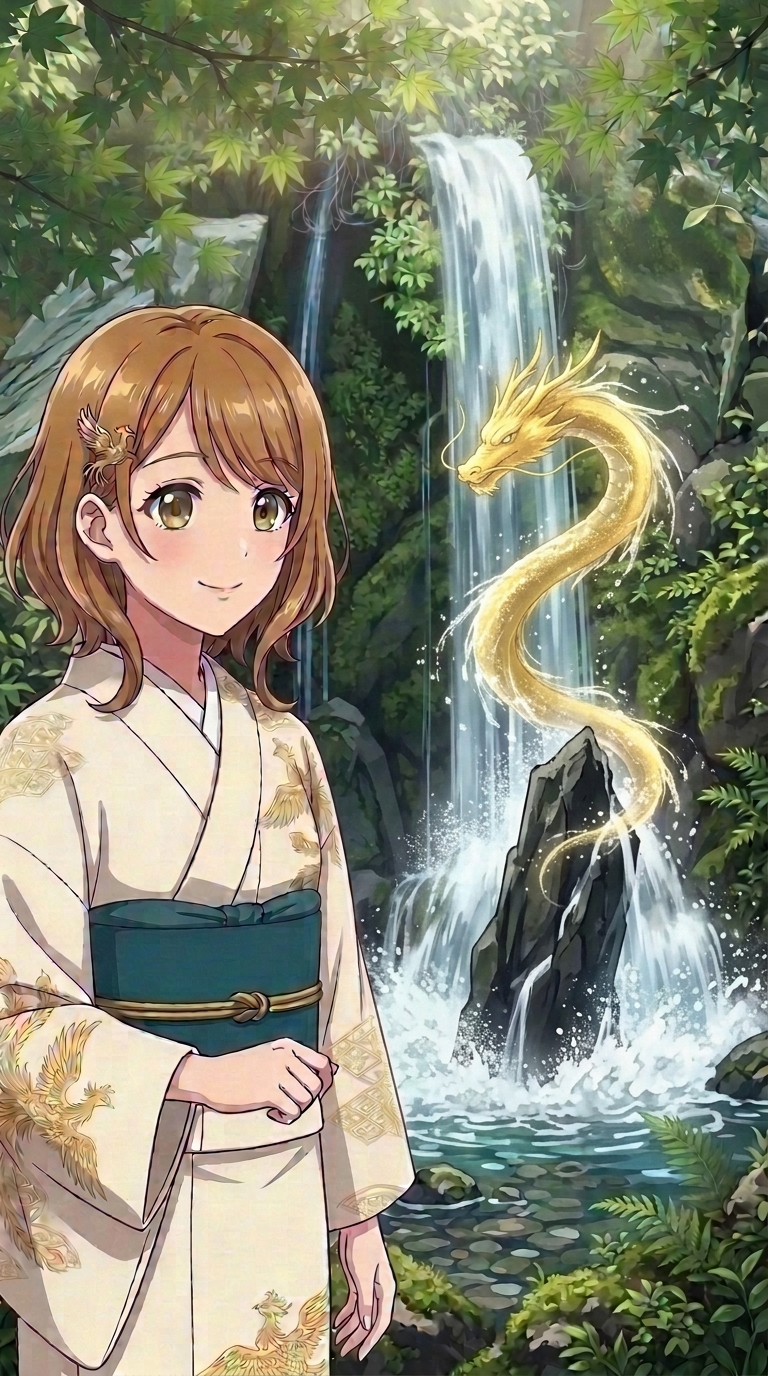
At the back of Kyoko-chi, at the foot of the garden hill, lies "Ryumon Waterfall." It is a single-tier waterfall about 2.3 meters in height. In the waterfall basin, a flat stone is placed diagonally; this is the "Carp Stone" (Rigyoseki). It is said to represent the figure of a carp about to leap up while enduring the raging current.
The origin is the Chinese legend of "Toryumon" (climbing the Dragon Gate), recorded in historical texts such as the Biography of Li Ying in the Book of the Later Han. A carp that successfully climbs the rapids of "Ryumon," a difficult passage on the upper reaches of the Yellow River, becomes a dragon. From this legend, it became a metaphor for overcoming hardships to attain success in life. It is believed that this scenery was placed in the garden to symbolize Ashikaga Yoshimitsu's rise to prominence and the meaning of Zen training, although historical records directly indicating the intention behind the garden's creation could not be verified.
Two Natural Springs Used by Yoshimitsu and the Hilltop Sekkatei
On the west side of Ryumon Waterfall, two spring water sites remain that convey Ashikaga Yoshimitsu's daily life. One is called "Gingasen," where Yoshimitsu drew water for the tea ceremony. The other is called "Gankasui," which Yoshimitsu used to purify his hands. Both are part of a garden design that skillfully incorporated natural spring water, preserving the history of tea ceremony culture that flourished at Kitayamaden to this day.
Around the ascending stairs passing beside Ryumon Waterfall, the "Kinkaku-ji-gaki" fence is maintained, featuring halved bamboo laid atop a low yotsume-gaki (four-eyed fence) of split bamboo woven at right angles, regarded as a representative example of traditional Japanese bamboo fence styles. On the hill climbed via the stone steps stands "Sekkatei," a sukiya-style teahouse associated with the tea master Kanamori Sowa. The name derives from the beauty of Kinkaku bathed in the evening sun when viewed from the teahouse. Known for its Tokonoma alcove pillar made of heavenly bamboo and staggered shelves of bush clover, the current building was reconstructed in the early Meiji period.
From Villa to Zen Temple and the 1950 Fire
The site where Kinkaku-ji currently stands is the former grounds of "Kitayama-dai," a villa built in the early Kamakura period by the court noble Saionji Kintsune. In the 4th year of Oei (1397), Ashikaga Yoshimitsu, the 3rd shogun of the Muromachi shogunate, received this land from the Saionji family and began construction of the vast mountain villa "Kitayamaden." Yoshimitsu made this place his de facto center of politics and diplomacy, promoting tally trade with Ming China and ushering in the prosperity of Kitayama Culture.
After Yoshimitsu passed away in the 15th year of Oei (1408), following his will, the mountain villa was converted into a Zen temple of the Rinzai sect's Shokoku-ji school. Muso Soseki was welcomed as the first head priest (founder), and the temple was named "Rokuon-ji" by taking two characters from Yoshimitsu's posthumous Buddhist name, "Rokuon'inden." Although many buildings were destroyed by fire during conflicts such as the Onin War, the Shariden escaped disaster and survived. While it was destroyed once by arson in 1950, it was reconstructed in 1955 faithfully reproducing its appearance at the time of founding, and in 1987, a large-scale renovation was carried out to reapply the lacquer and gold leaf.
Things to Check Before Visiting and Nearby Temples
Visiting hours, admission fees, and the availability of special viewings are subject to change. Before visiting, please check the official website of the Rinzai sect Shokoku-ji school for the latest information. The grounds follow a one-way route, proceeding from the Somon (main gate) to Kyoko-chi, the Shariden, and then looping around the garden through Gingasen, Gankasui, Ryumon Waterfall, Sekkatei, and the Fudo-do hall.
Along the "Kinukake-no-Michi" road in northern Kyoto City where Kinkaku-ji is located, there are World Heritage temples such as Ryoan-ji, known for its karesansui (dry landscape) rock garden, and Ninna-ji. For Ryoan-ji, the 15 stones of the rock garden and the story of "Ware tada taru o shiru" are summarized on a video page. Checking bus routes and timetables with the official city bus guide beforehand will make getting around smoother.
For Those Looking for a Place to Stay Around Here
If you are looking for accommodation in Kyoto, there is an article comparing accommodations around Fushimi Inari Taisha. Since it is located away from Kinkaku-ji, please check travel times on a map. In the "Related Articles" section at the bottom of the page, other Kyoto video pages are also listed.